Introduction to Underwater Welding
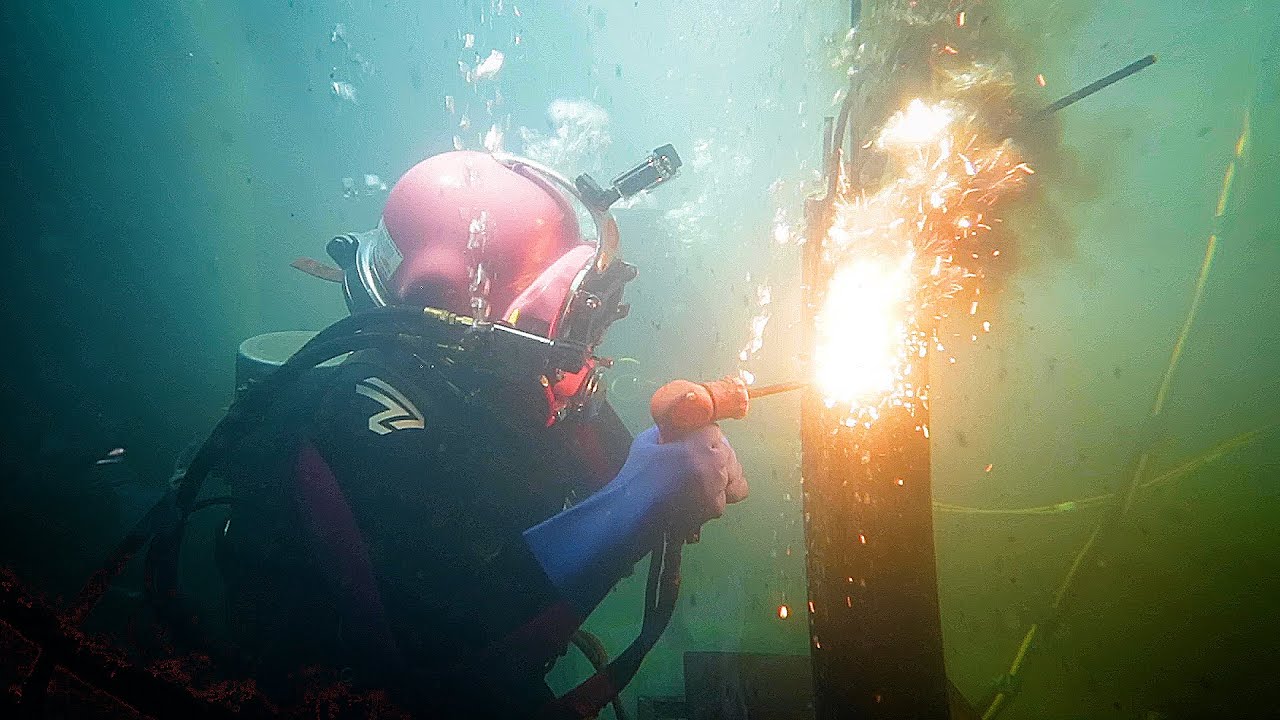
Underwater welding is a specialized form of welding that takes place below the surface of the water. It is used for various applications, including repairing ships, offshore oil platforms, and underwater pipelines. The unique challenges of this process require skilled professionals who can perform high-quality welds under extreme conditions.
Development of Underwater Welding
Prior to the 1960s, all underwater welding and cutting was performed as either a means of salvage or as a temporary repair. Ships and barges could be patched well enough to float and would then be taken to a dry dock for permanent repairs. Dry docks and other marine facilities were located on coastlines. These facilities could make repairs without the use of underwater welding. However, the need for underwater welding increased. Processes and equipment to allow underwater welding had to be developed.
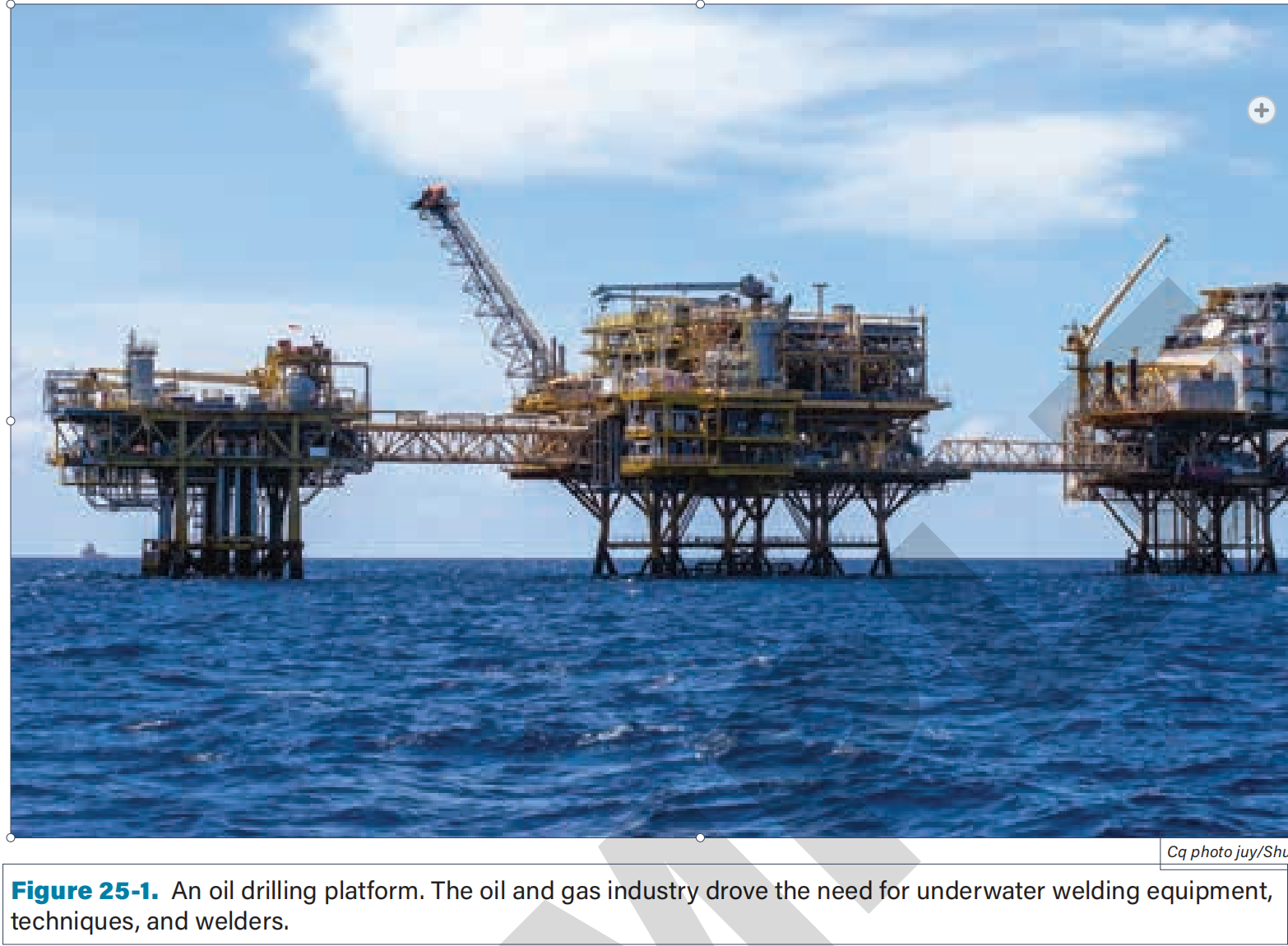
Early oil drilling and oil platforms were in very shallow water or near land. In the 1960s, the demand for oil sent oil companies farther offshore into deeper water. Permanent platforms were put in place, and it became necessary to develop solid repair procedures to use on these structures. Repair procedures were also needed to repair the pipelines that transported the crude oil and natural gas to shore.
Since all of these structures and pipelines were built to standards or codes, all repairs to them also are required to meet the same requirements.